
Criminal Cases in the Warren County Courts
Warren County criminal court cases are part of the North Carolina General Court of Justice. District Court hears misdemeanors and handles the early stages of felony cases. Superior Court hears felony trials and misdemeanor appeals for a new trial. Both divisions sit at the Warren County Courthouse, and the Clerk of Superior Court keeps their case files. Warren is in District 11 for prosecutorial, District Court, and Superior Court purposes.
The division matters when reading a docket. A felony may begin with a magistrate's process and District Court events, then move to Superior Court after indictment. A misdemeanor normally stays in District Court unless appealed. Norlina, Warrenton, and Macon do not maintain separate municipal criminal dockets. Town and state-law charges use the same state court system. The official Warren County courts page supplies calendars, forms, and service links for both divisions.
The Magistrate's Office at 103 North Front Street performs initial judicial functions and can set release conditions, yet filed Warren County criminal case records route to the clerk. The court directory lists magistrates at 252-257-6325 and the District Attorney at 252-257-6310. Keeping those roles distinct prevents a common search error: the magistrate handles process and release decisions, the prosecutor handles the charge, and the clerk preserves what was filed.
Superior Court judge offices listed for the district are outside Warrenton, but that does not move the Warren County case file. The clerk at the county courthouse remains the records contact for local District and Superior Court matters. A judge's office number is not a substitute for a docket search or copy request.
Warren Criminal Case Smart Search
Warren joined North Carolina eCourts on April 29, 2024. Its case information now lives in the statewide Enterprise Justice system. The public North Carolina eCourts Portal is useful for finding a case number, charge entry, event date, or hearing. It is free for ordinary public case information, but it is a research lead rather than a certified criminal-record product.
Start with the most exact key available. A record number avoids same-name noise. Name searches should be narrowed to Warren County and criminal matters. Read each charge line, not just the overall case status. A case can contain several counts with different outcomes, and the public document view can be narrower than the clerk's file.
Portal results may show the case number, parties, location, type, status, filing or event dates, hearings, charges, and public financial entries. Document access varies by record type. A result can point to a useful Warren County criminal file without exposing every pleading. Advanced filters refine the first query, while Reset or Clear removes filters when a county or category selection produces the wrong pool.
Search spelling carefully. Initials, suffixes, aliases, and data entry can split what looks like one name into several candidate results. Do not identify a person from the name alone. Confirm location, case number, dates, and charge details through the clerk, especially when the Warren County criminal case search returns more than one possible match.
| Portal field | Type | Required | Use |
|---|---|---|---|
| Smart Search | Text | Query required | Party name or record number |
| Record Number | Text | Alternative | Direct case identifier |
| Citation Number | Text | Alternative | Find a citation-linked case |
| Attorney Bar Number | Text | Alternative | Attorney-linked matters |
| Location/County | Dropdown | Optional | Select Warren County |
| Case Category | Filter | Optional | Choose criminal when shown |
How to Search Case Records
A complete Warren County case search uses remote results as a starting point and the clerk's file as the authority. Names can be shared, spelling can vary, and some documents do not appear online. Keep the case number, filing date, charge, and court division together while comparing records.
- Open eCourts Portal and search by record number or party name.
- Set the location to Warren County and apply the criminal filter where available.
- Open the likely result and compare case number, filing date, court, and charge-level entries.
- Check hearing dates through the official court-date search and note later docket events.
- Ask the Warren clerk to inspect the filed record or supply the needed copy or certification.
The North Carolina court-date search is the source for this Warren County criminal case image.
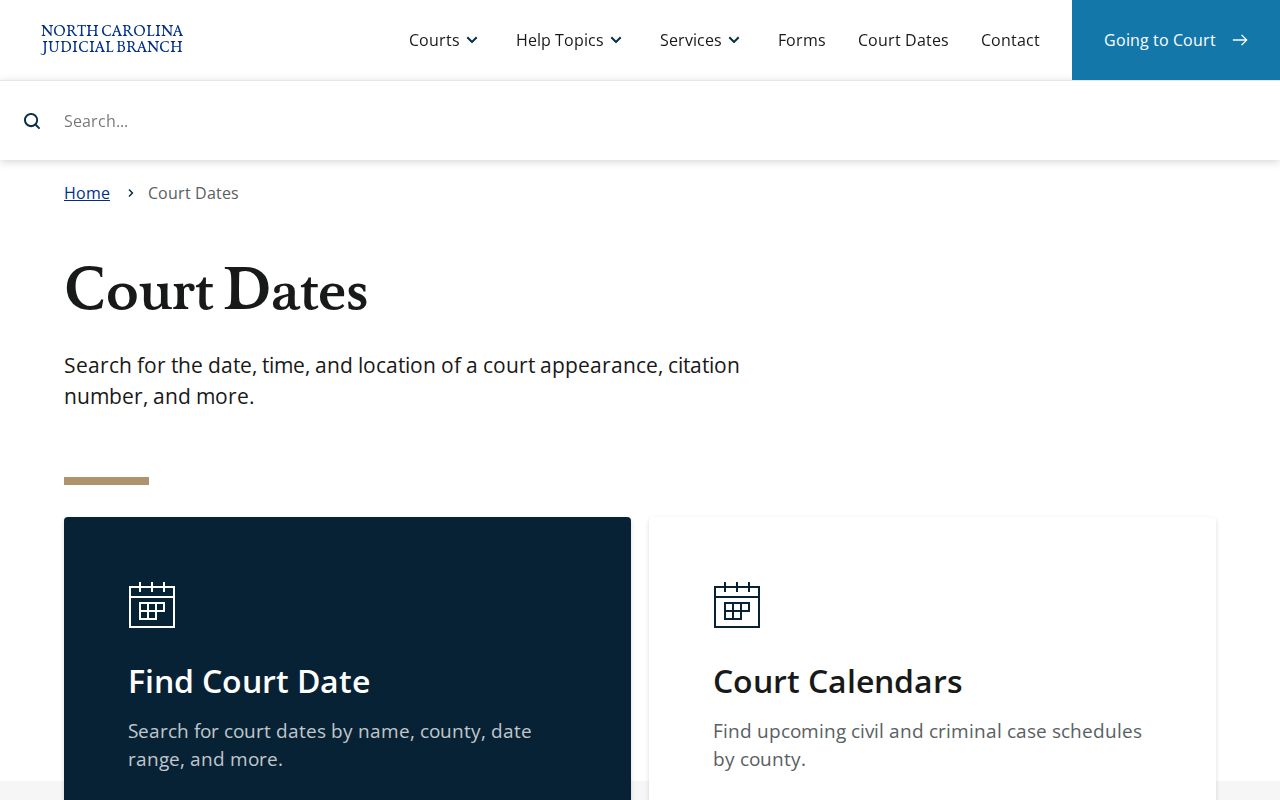
The tool helps locate a setting, while the Warren criminal case docket remains the place to read events and outcomes.
At the result level, compare the hearing type and court location with the open case. A calendar date can change after a continuance or administrative setting. Save the case number and check again near the scheduled date. For an authoritative notice, contact the clerk rather than relying on an older search result. The official court calendar is a scheduling aid, not a judgment or proof that a hearing occurred.
If a result shows several charges, open each public charge line. One count may have a disposition while another remains pending. Note process and hearing events in date order. Then request the judgment, dismissal entry, or other filed paper that answers the actual question instead of purchasing every document in the Warren County case file.
Warren Criminal Case Terminal
The Warren County Courthouse at 109 South Main Street in Warrenton offers a free public self-service terminal. The clerk's office is open Monday through Friday, 8:30 a.m. to 5:00 p.m., and the main number is 252-257-6300. Official guidance says terminal searches can use a defendant name, case number, or victim or witness name and can cover one county or the state. Printing may cost money.
A terminal can answer questions that remote access does not. Ask to inspect the Warren paper or electronic file after finding the docket. The clerk can explain the available copy channel but cannot give legal advice. Older or preconversion material may need a direct file or archive check.
Bring the exact name, possible aliases, approximate filing year, and case number when known. The courthouse terminal can search statewide without charge, which helps when a case may have been filed outside Warren County. Once a Warren match appears, ask for the actual docket and needed filed document. The courthouse page gives no confirmed parking, device, or photography rule, so call ahead for current entry and record-inspection procedures.
Mail can work when travel is hard across Warren County's rural area. First call the clerk to confirm the document, current copy cost, certification need, accepted payment, and mailing instructions. The research did not verify a Warren-specific per-page copy price. Avoid sending an assumed amount or a vague request that leaves the office unable to identify the case.
Warren County Clerk
109 S. Main St.
Warrenton, NC 27589
252-257-6300
Weekdays, 8:30 a.m.-5:00 p.m.
What the Case File Shows
A Warren County criminal case file records the prosecution, not just the first accusation. It may show the State of North Carolina and defendant, attorneys, filed charges, hearings, motions, plea or trial events, charge-level dispositions, judgment, financial entries, and an appeal. Public views omit sealed or confidential material and should not display protected identifiers.
| Case Number & Court | The identifier, filing location, division, type, filing date, and status. |
|---|---|
| Charging Document | Citation, summons, magistrate order, warrant, information, or indictment. |
| Docket Entries | Service, first appearance, settings, continuances, motions, plea, trial, and judgment. |
| Hearing Dates | Date, time, court location, and hearing type. |
| Disposition & Judgment | The result of each charge and the court's final ruling. |
| Sentence & Conditions | Custody, probation, costs, restitution where public, and appeal entries. |
Financial entries must also be read in context. A listed fine, cost, restitution amount, or payment option does not reveal whether every count ended in conviction. Documents may include process, counsel appearances, motions, continuance orders, plea paperwork, verdicts, judgments, probation terms, or notices of appeal. Confidential and sealed papers stay outside the public inventory, even when the existence of the case can be found.
The offense date and filing date can differ. The same is true for arrest, indictment, plea, and judgment dates. Readers tracing a Warren County criminal case should preserve each date with its label. Combining them into one “case date” can hide a long gap, attach the wrong event to a charge, or confuse an older arrest with a later court outcome.
Reading Warren Criminal Case Dispositions
Case status is not the same as charge disposition. A file may remain open while one count is dismissed and another is pending. A dismissal is not a conviction. A not-guilty result is an acquittal. A guilty plea or verdict followed by judgment is a conviction. North Carolina's “prayer for judgment continued” has distinct legal effects and should not be described as a simple dismissal.
- Disposition
- The recorded outcome of a charge.
- Nolle prosequi
- A prosecutor's formal choice not to proceed on that charge at that time.
- Indictment
- A grand-jury accusation that permits a felony prosecution in Superior Court.
- Order for arrest
- North Carolina process directing custody, often after a failure to appear or comply.
Read the filed Warren County record count by count. An arrest-time charge can be amended, replaced by indictment, or resolved in another form.
A true bill means the grand jury returned an indictment; a no bill means it declined. An order for arrest is court process, often tied to a failure to appear or comply, and is not itself a new conviction. Probation is a sentence served in the community under state supervision. These labels should be matched with the event date and the charge they affect before drawing a conclusion about the Warren case.
A continuance moves a setting and does not decide guilt. An arraignment is the stage at which charges are formally addressed and a plea may be entered. Restitution is payment ordered for a qualifying loss. Plain definitions help, but the Warren judgment controls how each term applies in the actual criminal case.
Stages of a Criminal Case
A Warren County criminal case may begin with a citation, summons, warrant, or arrest. A magistrate can issue process and make an initial release decision. District Court handles first appearances and misdemeanor proceedings. Felony cases may move through probable-cause steps or waiver, then to a grand jury and Superior Court. Court dates vary with custody, session schedules, motions, and continuances, so no fixed local completion time is supported.
Case flow: Charges Filed → Arraignment → Pretrial → Plea or Trial → Disposition → Sentencing
The official Warren court payment page supplies this criminal case image.
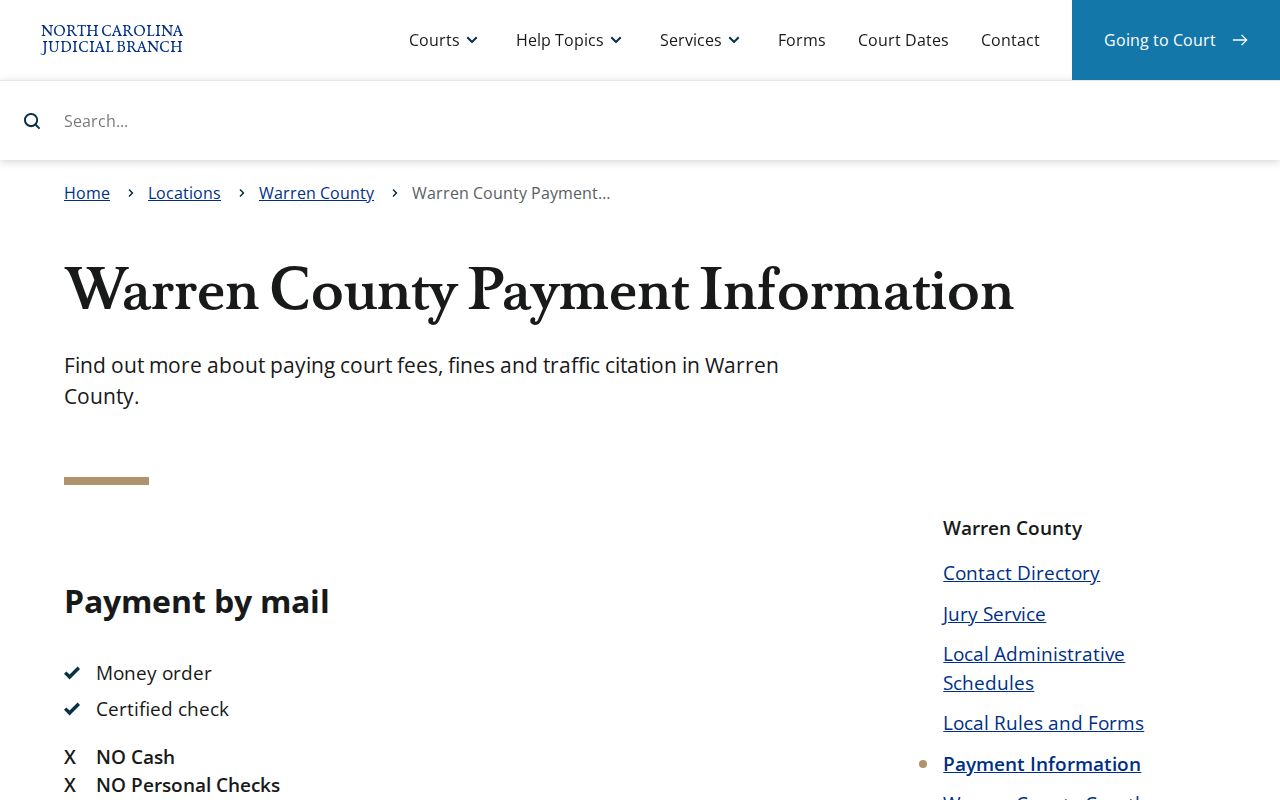
The payment channel does not replace the judgment. Read the filed outcome and financial entries before treating a balance as proof of case status.
Some Warren felony cases show District Court events before Superior Court arraignment because the lower division handles early proceedings. A probable-cause hearing may occur or be waived. A grand jury can then return an indictment. Pretrial motions, negotiated pleas, trial, and judgment follow according to the case. Appeals add another record layer, and a District Court misdemeanor appeal reaches Superior Court for a new trial rather than a simple review of the lower court paper.
The filed charge can also depart from the booking charge. Prosecutors may select a different offense, and an indictment may supersede the earlier accusation. That is why the Warren County criminal court case, not a jail entry, is the sound source for what the state prosecuted. The final judgment answers what the court decided.
Warren Criminal Cases Before eCourts
April 29, 2024 is Warren County's digital dividing line. Portal access after that launch did not erase older criminal files. A pre-eCourts case that is hard to locate online may still exist in the clerk's paper or archived holdings. Bring a name, approximate year, charge, and old case number if known. The clerk can identify the inspection and copy route.
Federal cases are separate. Warren lies in the Eastern District of North Carolina, and a federal indictment or judgment will not sit in the Warren eCourts file. The Eastern District's official site is the source for this image.
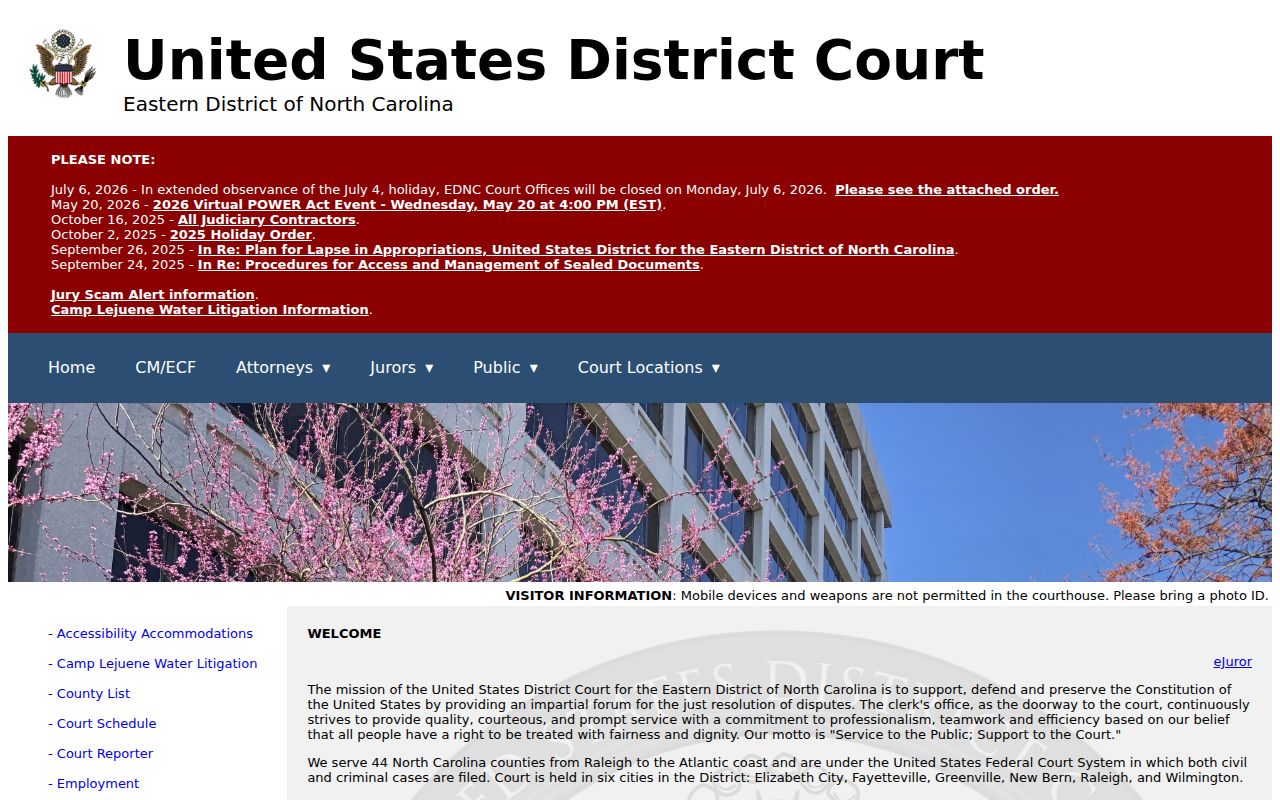
Use that court for federal office information and the official federal docket channel.
The PACER source page appears in this Warren County court-record image.
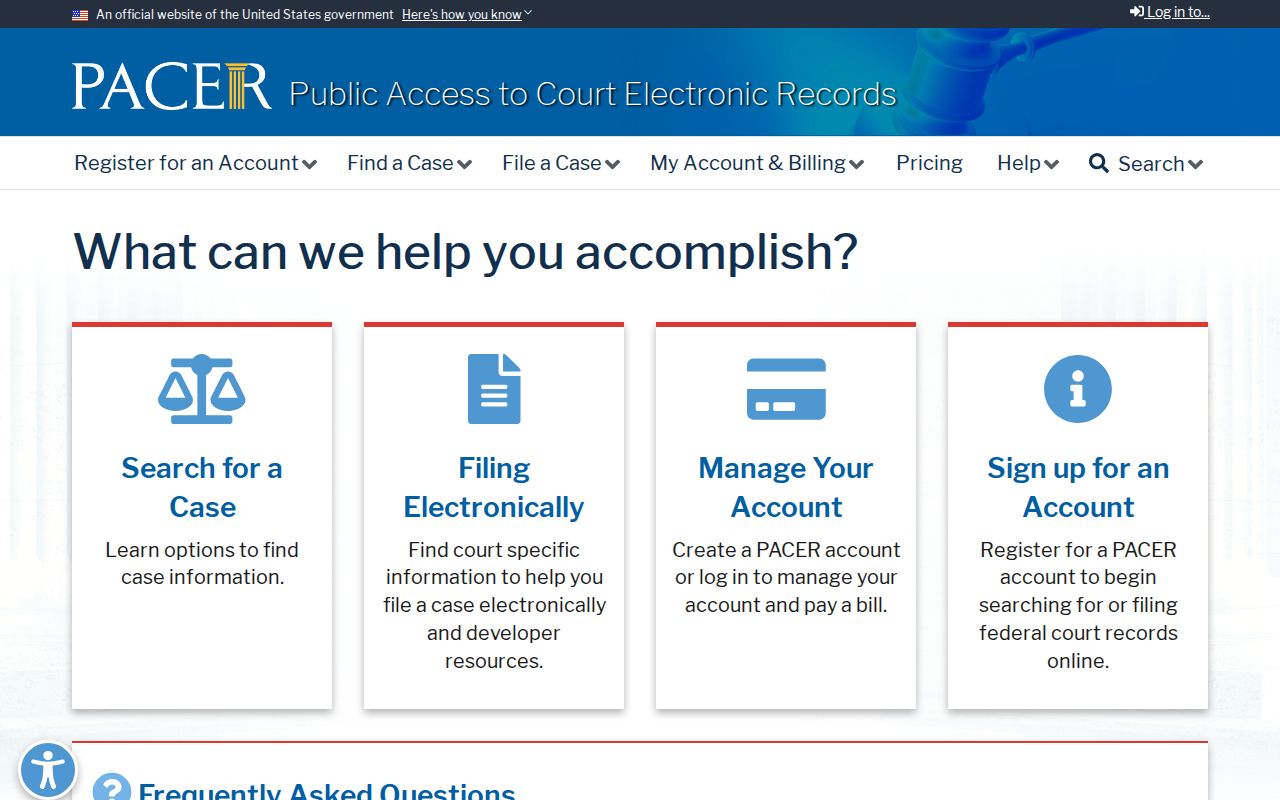
PACER requires an account and generally charges by the page, so use it only when the matter is federal.
State and federal identifiers are not interchangeable. A Warren eCourts number will not open a PACER docket, and an FBI identity-history review does not supply federal pleadings. Federal prison custody is also separate from the county jail and North Carolina correctional system. Identify the prosecuting court first, then use the matching docket source. This avoids paying for federal searches when the case was filed at the Warren courthouse.
Electronic conversion can also affect how an older event is indexed. A missing scanned document is not proof that the filing never existed. Ask whether the Warren County criminal record is in paper, archive, or a restricted document tier. Give the clerk enough facts to find it without asking the office to create a new history.
Certified Warren Criminal Case Searches
Portal results are not certified. For a certified, name-based Warren County court-record search, submit AOC-CR-314 to the clerk with the $25 fee. It covers Warren court records, not a fingerprint-linked statewide history. Counter payments may use cash, credit card, money order, or certified check, with a card processing fee. Mail accepts money order or certified check, not a personal check.
Official North Carolina criminal-record check guidance supplies this Warren criminal case image.
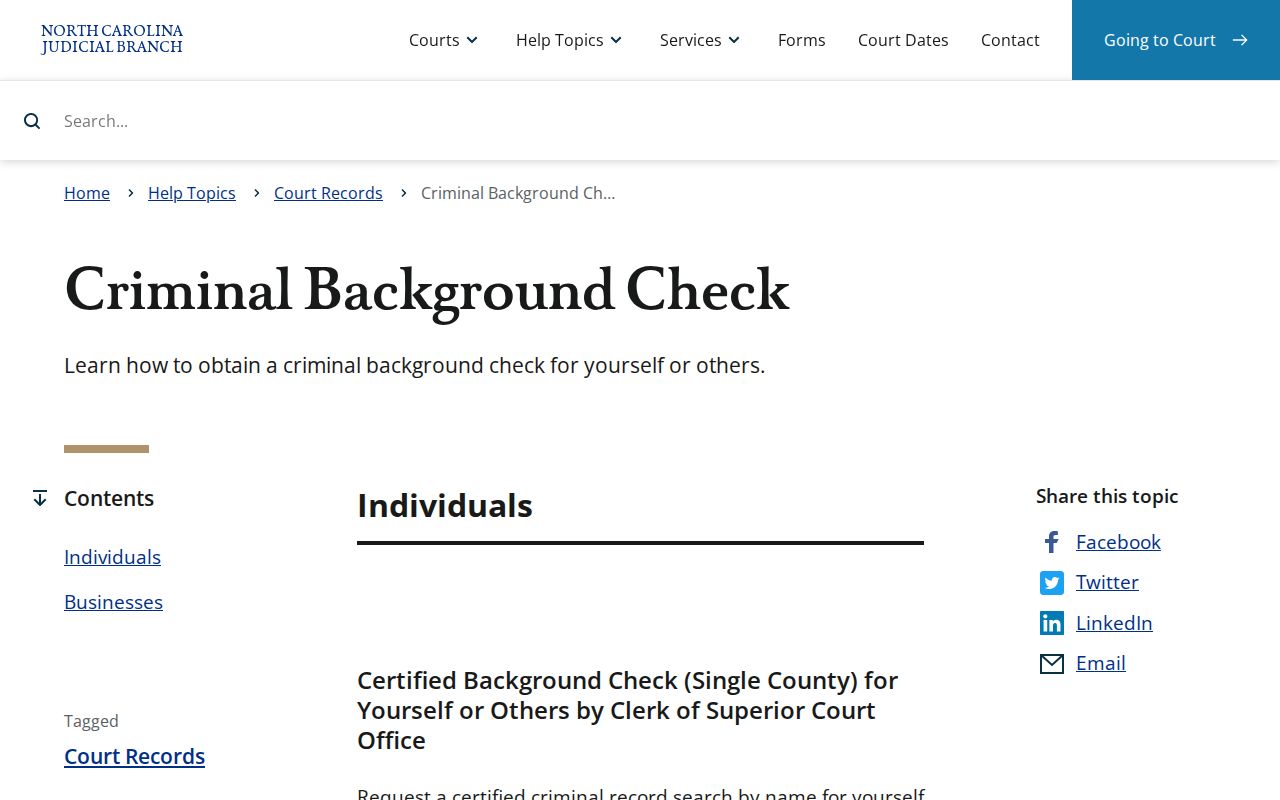
The guidance separates a certified clerk search, free terminal research, and SBI personal review.
The live AOC-CR-314 form page is the source for the next image.
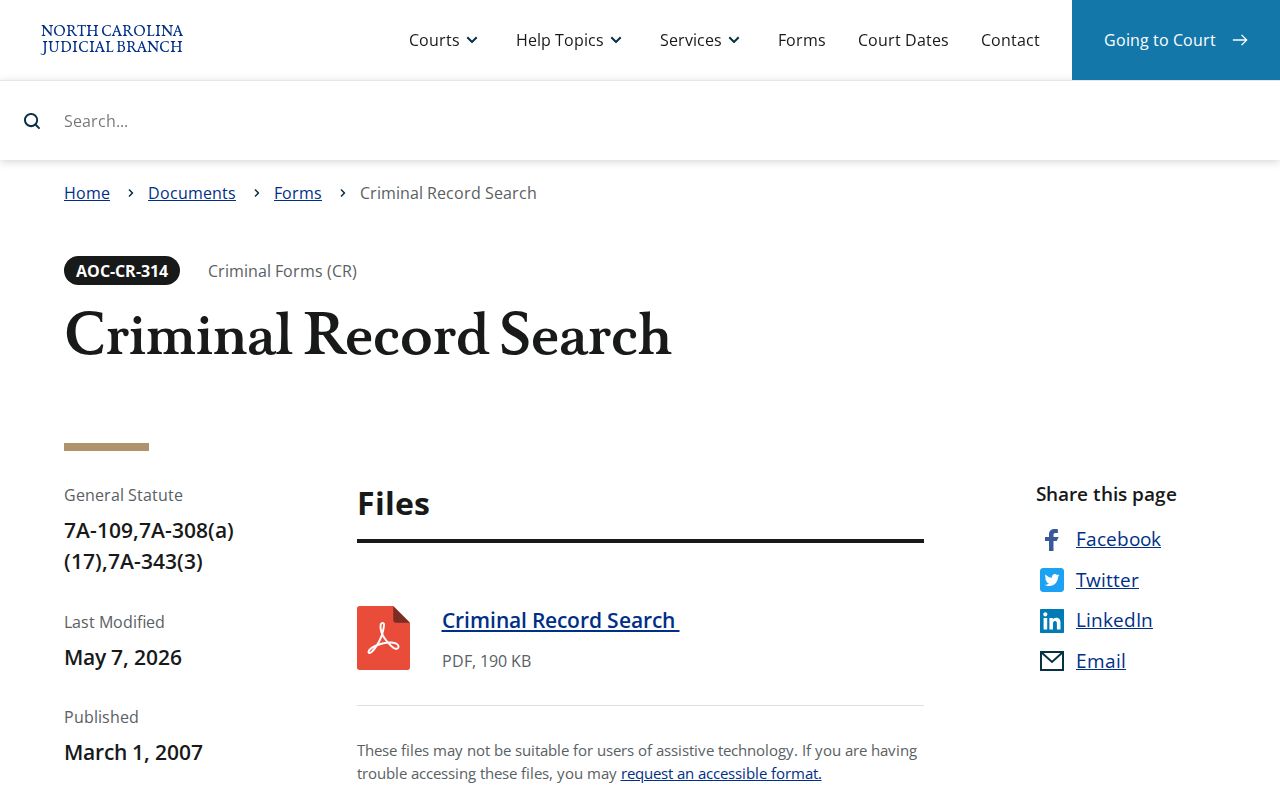
Use the current revision and complete each required field before sending it to the clerk.
The form asks for the searched person's identifying information, the county, copy and certification details, requester contact information, and clerk payment fields. Use the live version because form wording can change. The $25 result is limited to a Warren County name search. It does not replace the subject's $14 fingerprint-based NCSBI Right to Review, which can connect statewide arrest cycles with dispositions through identity data.
A free statewide courthouse-terminal search may be better for broad research, while AOC-CR-314 is the Warren-only certified option. Portal is best for a remote lead. These channels overlap but are not identical. Choose the record based on scope, identity assurance, and whether an official certification is actually needed.
Access & Restrictions
North Carolina law generally makes court records available through the clerk, subject to statutes, rules, and orders. G.S. 7A-109 assigns clerks the recordkeeping and public-inspection role. Juvenile matters, expunged cases, sealed proceedings, protected victim or minor data, and sensitive identifiers are outside ordinary public access. Portal can also hide documents that require clerk review or cannot lawfully be released.
If a Warren County criminal case is missing remotely, give the clerk the known details and ask whether the record is older, restricted, expunged, or filed under a different key. Do not send a county case-file request to the NCAOC administrative-record form, because NCAOC is not the custodian of county case documents.
North Carolina Public Records Law governs many government records, but court files use the clerk's court-record channel. Criminal investigation material held by police is also different from a filed case. G.S. 132-1.4 makes specified arrest facts public while allowing investigative narratives and evidence to be withheld. A Warren court search should therefore not be treated as a demand for the arresting officer's full investigative file.
Expunction can remove eligible public records after an order and agency notices. A mere petition does not make the Warren County case disappear. When checking one's own relief, obtain a certified order, allow processing time, and verify the clerk view and SBI personal record separately. Different official systems may update on different schedules.
Note: A missing public result may reflect access rules or indexing, so it does not prove that no Warren County case exists.